Technology and digitalization are fundamentally transforming public procurement, enhancing efficiency, transparency, and accountability while reducing costs and promoting innovation.
By embracing digital technologies, governments and public procurement organizations can streamline processes, improve data-driven decision-making, and create a more responsive and accountable public sector.
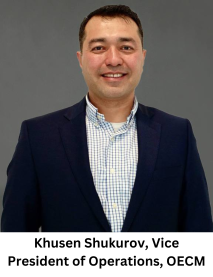
“The public procurement landscape is undergoing a significant digital transformation driven by the need for transparency, efficiency, compliance, and responsiveness to stakeholder expectations. In Ontario and across Canada, technology is becoming a central enabler in reimagining how public sector organizations plan, execute, and manage procurement,” says Khusen Shukurov, Vice President, Operations, OECM.
Technological advancements are facilitating the shift from manual, paper-based processes to integrated, data-driven ecosystems. These innovations enable real-time data access, improved supplier performance monitoring, enhanced customer engagement, and ultimately, better procurement outcomes. Through technologies, procurement departments can now digitize and automate core activities, increasing speed to market while reducing risks related to data loss and non-compliance.
“Public sector organizations are leveraging a range of modern platforms and tools, including AI-powered analytics, workflow automation solutions and e-procurement portals,” says Shukurov. “These tools collectively enable organizations to enhance governance, improve efficiency, and elevate stakeholder engagement—critical components in a complex, regulated procurement environment.”
OECM LEADING THE WAY

As a leader in procurement, OECM has been proactive in adopting new and emerging technologies. The organization is committed to delivering value-driven procurement services, and its digitalization strategy utilizes technology not as an add-on, but as a core enabler of its service delivery model.
Much of OECM’s process and technology improvements have been developed internally rather than outsourced, resulting in significant cost savings and faster integration timelines. This strategic approach to in-house development allows new technologies to be customized and seamlessly integrated into existing systems and processes, with built-in flexibility to add future functionalities. This enables faster adoption, enhanced data integrity, and a stronger sense of ownership across teams.
The integration of digital tools also aligns with OECM’s mission, which is to deliver savings, choice, and value through collaborative, innovative, and transparent procurement. Integrating automation and intelligent tools allows for continuous improvement, accountability, and strategic foresight.
“By centralizing data and automating processes, OECM has improved scalability, enhanced data integrity, reduced administrative burden, and freed internal capacity to focus on more strategic and value-added initiatives that directly benefit our customers and suppliers,” says Shukurov. “These tools not only uphold our values of excellence and transparency but also equip OECM to proactively adapt to emerging customer needs, supplier capabilities and sector-wide challenges.”
Another key success factor has been investing in people. OECM has identified a group of “AI champions” across departments who receive targeted training on emerging technologies. These champions lead cross-functional initiatives and mentor colleagues on how to apply AI and automation to streamline work, reduce manual tasks, and increase efficiency in their respective areas. This internal expertise amplifies the impact and effectiveness of technology investments.
By digitalizing approval workflows, OECM has been able to automate critical business functions including sourcing, contract amendments, supplier performance evaluations, customer business reviews and engagement tracking.
“At OECM, our digital workflows are not only designed to enhance efficiency but also to uphold the highest standards of public trust, audit readiness, and ethical governance,” says Shukurov.
OECM’S CONTRACT OPTIMIZATION
OECM has delivered a suite of impactful internal technology initiatives over the last two years, including the Contract Amendment Process Optimization project. The project is a flagship example of OECM’s technology leadership. By digitizing the amendment process, OECM eliminated more than 1,300 hours of manual work annually, introduced standardized workflows, and significantly improved approval turnaround time. The automated platform now provides real-time tracking, system-generated alerts to suppliers, built-in audit trails, and centralized data capture.
“This transformation not only improved transparency and compliance but also positioned OECM to efficiently scale agreement management as our portfolio continues to grow,” says Shukurov.
This initiative, along with others, has enhanced the agility, responsiveness and reliability of OECM’s procurement services. Benefits to customers include:
- Quicker access to competitively procured agreements.
- Improved supplier accountability and performance visibility.
- Reduced administrative workload.
- Better alignment with strategic planning and fiscal timelines.
ENHANCING ENGAGEMENT

OECM has adopted a digital-first model to enhance engagement across its stakeholder ecosystem. By automating outreach planning, event tracking, and customer interaction logging within OECM’s Customer Relationship Management (CRM) system, efficiency, coordination, and visibility have increased significantly across teams.
“Our Customer Relationship Management and Business Development teams now utilize an integrated platform to manage over 200 outreach activities annually, with system-generated dashboards that track event participation, customer feedback, follow-ups, and spend outcomes. These insights allow OECM to prioritize high-impact opportunities and tailor messaging and support accordingly,” says Shukurov.
He also cites that customer meetings have been expedited with reports now generated in 30 minutes or less compared to the previous two hours. Live data on agreement utilization and spend can be directly pulled from the internal CRM system, allowing for real-time documentation of meeting minutes and better decision-making based on historical and current engagement data.
“By integrating customer engagement and procurement data into a unified platform, OECM empowers teams to tailor support based on each institution’s history, performance, and feedback. The result is a more responsive, personalized, and impactful procurement service model,” notes Shukurov.
BEST PRACTICES

Public procurement professionals should consider these best practices when exploring technology for their own organizations:
- Begin with a needs assessment and process mapping to identify inefficiencies and pain points.
- Focus on automating high-volume, low-value activities to maximize early ROI.
- Ensure data interoperability and system integration to support organization-wide use.
- Establish cross-functional governance structures to oversee implementation.
- Embed continuous improvement and user feedback loops to refine tools over time.
- Invest in training and designate technology or AI champions to build internal capability, encourage adoption, and foster a culture of continuous learning and innovation.
Shukurov emphasizes that innovation needs to be balanced with compliance and transparency to achieve success in a highly regulated procurement environment.
“Implement systems with built-in audit trails, version control and automated approval tracking. Ensure that all process changes align with public procurement laws and trade agreements,” he advises. “Train staff on both technical tools and policy frameworks to ensure consistent, compliant execution.”
LOOKING AHEAD
OECM will continue to evolve its technology capabilities to support innovation, agility, and resilience. Shukurov says upcoming OECM initiatives include:
- Integration of CRM system with OECM’s public-facing website to improve external visibility of events and engagements.
- Advanced analytics and predictive modeling to inform sourcing plans and demand forecasting.
- Further AI integration to support intelligent contract management, risk flagging, and spend categorization.
- Enhanced ESG tracking tools to support sustainable and socially responsible procurement.
These forward-looking investments will ensure OECM remains at the forefront of public procurement excellence, with the evolving needs of the public sector and the communities they serve driving continuous improvement and measurable impact.
This article was published in the August 2025 issue of the Ontario Public Buyers Association (OPBA) Caveat Emptor E-News.