
Education, community wellbeing and the importance of relationships were at the heart of OECM’s visit to Chippewas of Rama First Nation on Tuesday, October 27, 2026.
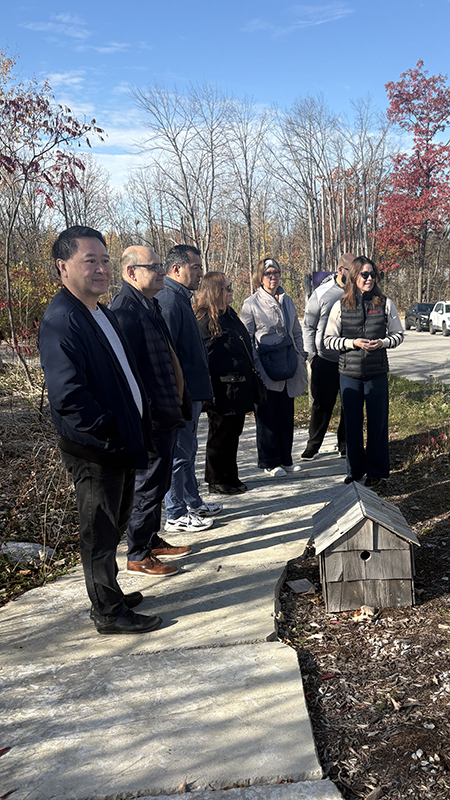
Led by Kailey LeDrew, Business Development Manager at Rama Office Interiors (ROI), a supplier on OECM’s Indigenous Marketplace, the tour offered an opportunity to learn directly from community members about Rama’s history, culture and priorities for future generations. The visit built on OECM’s ongoing commitment to strengthening ties with Indigenous and Métis organizations.
Stops at the school, health centre, gathering grounds, community hall, farm and Casino Rama highlighted the connections between education, community wellbeing and economic opportunity.
Connecting Relationships to Economic Opportunity
Visits like this are an important part of OECM’s Indigenous journey. Learning about Indigenous businesses, their capabilities and their communities’ priorities helps us build relationships and strengthen connections between these businesses and our customers.
Through the Indigenous Marketplace and our relationships with Indigenous communities and associations, OECM can help increase visibility for Indigenous businesses, reduce barriers to participation in procurement and support opportunities that contribute to local economic development.
“Our ESGI principles call on us to build respectful relationships, keep learning and consider how procurement can support community wellbeing. Seeing how a community-owned business contributes to education, culture and care brought that connection to life and reinforced why these relationships matter.”
– Patrice Likamshum, Director, Business Development, OECM
Education shaped by community priorities
The day began at Mnjikaning Kendaaswin Elementary School (MKES). The team learned how the school brings academic learning together with Anishinaabe culture, daily Ojibwe lessons and the Seven Grandfather Teachings.
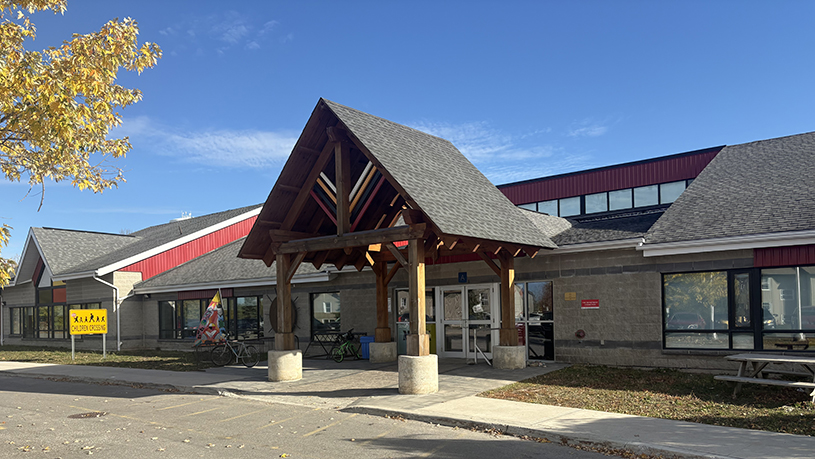
The Director of Education for Chippewas of Rama First Nation, Lise Kwekkeboom, described the school’s growth, including dedicated spaces for language, music and resource support. Regular drumming and language learning strengthen cultural connections, while services for children with autism spectrum disorder help students receive support within their own community.
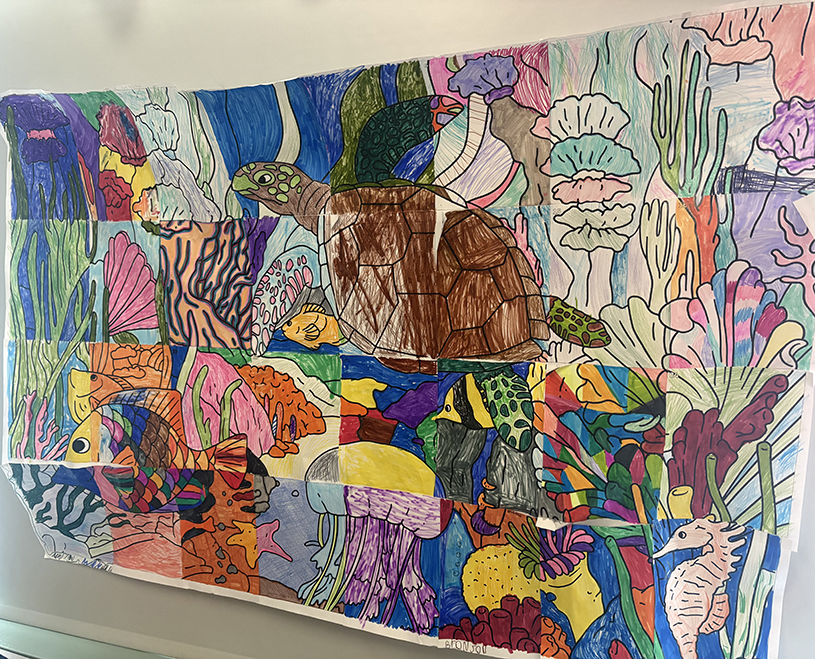
She explained that greater control over education funding allows Rama to direct resources towards students’ needs, including additional mathematics supports. Her comments illustrated the practical importance of self-governance: making decisions locally about how best to support children and families.
“Having greater control over education means we can respond to the needs of our children here in the community. We can invest in the supports they need while ensuring that language, culture and a strong sense of identity remain part of their learning.”
– Lise Kwekkeboom, Director of Education, Chippewas of Rama First Nation.
The conversation also placed the school within a difficult history. Lorraine described the closure of Rama’s Indian day school in 1964, the subsequent busing of children into town and the discrimination community members experienced. These experiences remain within living memory, underscoring the significance of a school where children can learn while strengthening their identity and sense of belonging.
Gathering grounds that connect generations
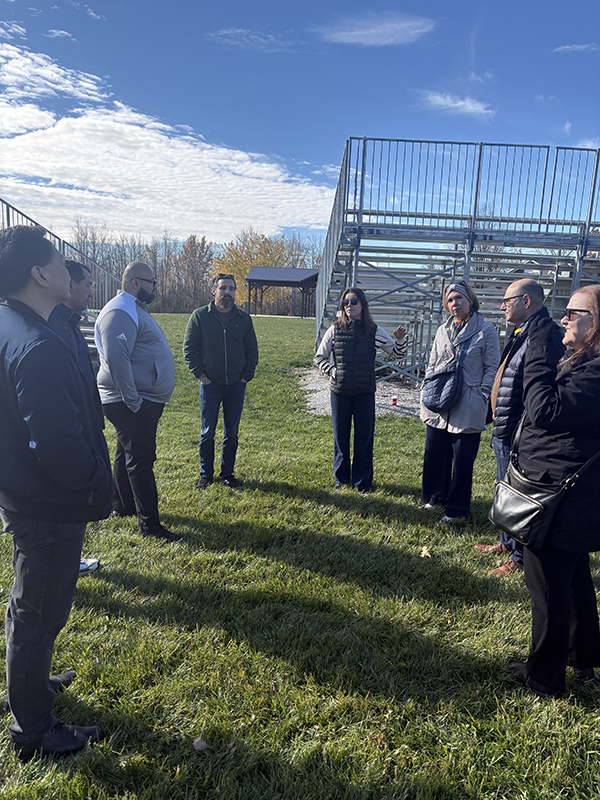
At the John Snake Memorial Multipurpose Grounds, the team learned about the gathering place where Rama holds its annual powwow. Rama has hosted the event for more than 40 years, welcoming people to celebrate First Nations culture through song and dance, alongside food, arts and crafts vendors. The grounds also provide space for ceremonies and community connections.
“I highly encourage everyone to come at least once to a pow-wow. The energy is amazing,’ said LeDrew.
Learn more about Rama’s annual powwow
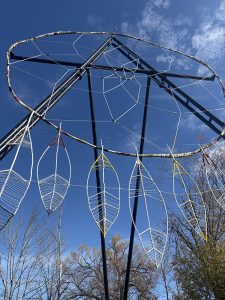
The grounds are also home to the world’s largest dreamcatcher. Created by Rama’s Dale “Bobbie” Williams with community support, it measures 12.93 metres across and achieved its Guinness World Record on April 30, 2024. Learning about Williams’ hope that it would help protect the community gave the team a deeper appreciation of the meaning and collective effort behind the achievement.
Culture care and reconnection
The visit to Rama Health Centre and its walking pathway offered further learning about healing and belonging. Integrated Care Supervisor, Chippewas of Rama First Nation, Kyle Sauve explained the relationships between people, the land, animals and medicines gathered locally. Discussions also highlighted the importance of confidentiality and earning trust in community care.
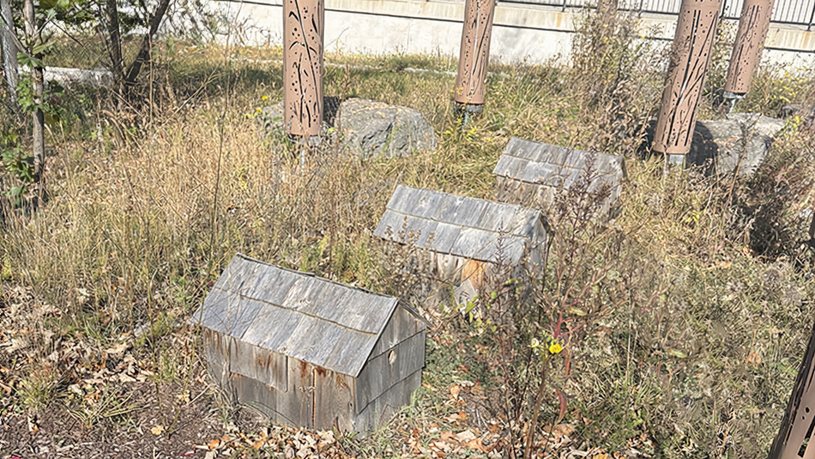
Pictured are spirit houses known as jiibegamig or grave houses, outside of outside Mnoyaawgamig (the House of Wellbeing), which is the Rama Health Centre on the Chippewas of Rama First Nation reserve in Ontario. The houses serve as a reminder to honour those no longer with us.
Interpretive signs along the pathway added depth to these conversations. The Nibi/Water panel connects water with creation and healing, acknowledging Indigenous children separated from their families, Nations and traditional lands through the Sixties Scoop. The Noodin/Wind panel represents those who have not returned, expressing that they remain welcome and the hope that loved ones will come home.
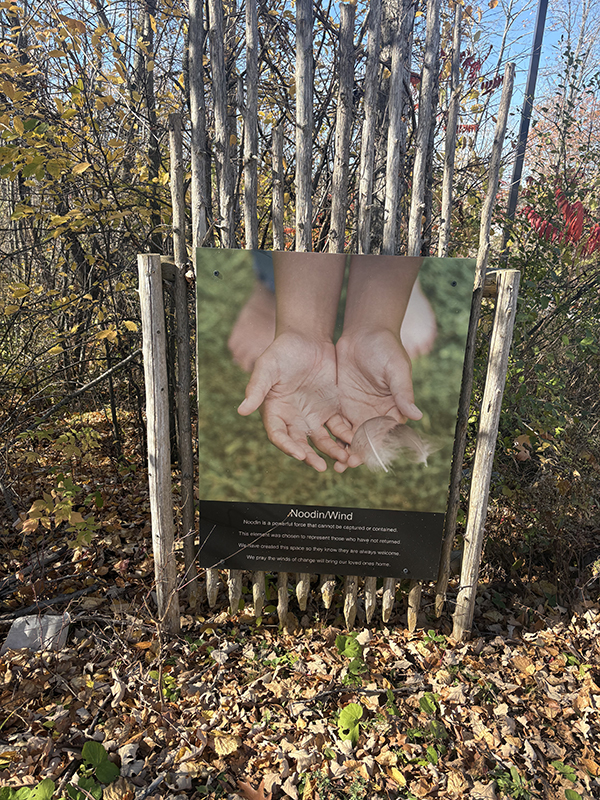
Alongside representations of fire and earth, these teachings helped the team understand the pathway as a place for ceremony, remembrance and reconnection.
Learning through listening and storytelling
Over lunch at Rama Community Hall, OECM was honoured to spend time with Chief Ted Williams, who shared reflections on leadership, relationships and purpose. Through storytelling, he demonstrated how listening carefully and responding thoughtfully can deepen understanding and strengthen connections.
Chief Williams recalled deciding at age 12 that he would one day become Chief. Although he kept that ambition to himself, he remained guided by the beliefs that inspired it. At 25, he became the youngest elected Chief of the Chippewas of Rama First Nation. His career has also included success in real estate, chairing the development of Casino Rama and serving as its Vice President of Corporate Affairs and Human Resources. Drawing on these experiences, he encouraged the team to identify their goals, write them down and believe in their ability to achieve them.
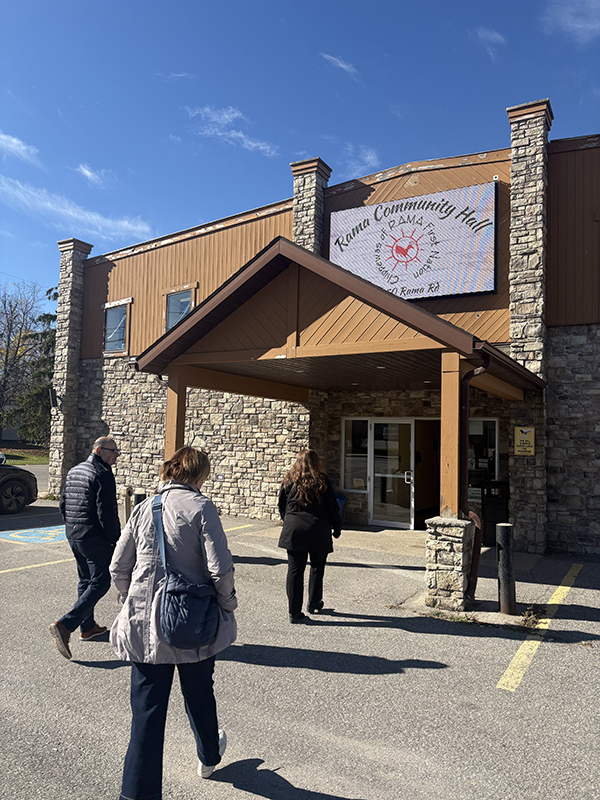
Relationships have been central to his approach to leadership—a value he shares with his community and family. He also reflected on the importance of using money for good, explaining that financial resources, guided by authenticity and a clear purpose, can serve people and support meaningful change.
“Relationships grow when we take the time to listen and respond to one another. When we bring that same care and a good purpose to our decisions, we can create opportunities that serve our community and future generations,” noted Chief Williams.
That connection between business and community wellbeing was echoed by Mary-Anne Willsey, Director of Business Operations with Rama First Nation; “When you buy from Rama Office Interiors, you change lives.”
As an Indigenous community-owned business and OECM supplier partner, ROI reinvests its profits in the community, supporting priorities that include language, culture, youth, Elders and healthcare, explains Willsey. Her words reinforced how purchasing decisions can contribute to priorities defined by the community itself.
Growing food and community skills
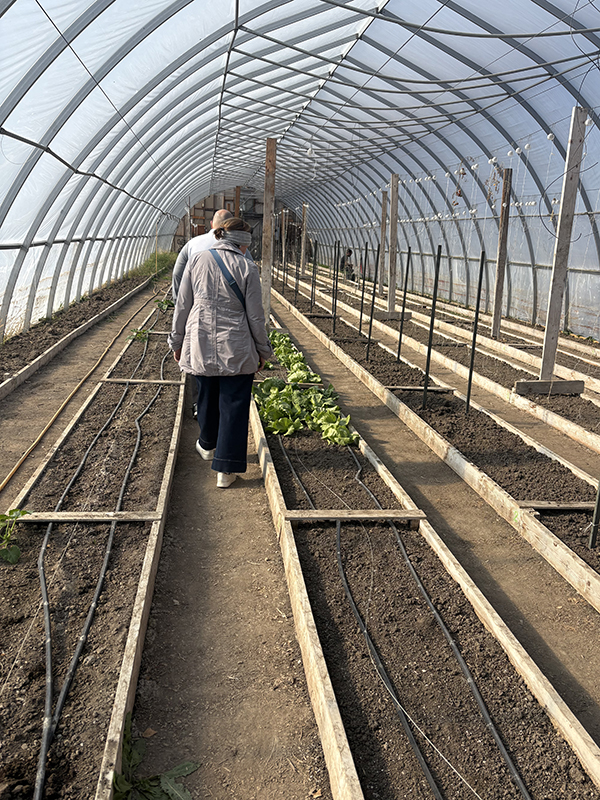
At Rama Maawnjiydiwag Gtigaan, the Rama Community Farm, the team learned how growing food also supports community wellbeing and practical skills.
Owned and operated by Chippewas of Rama First Nation, the farm began development in 2018. Community members working there develop planting and harvesting knowledge while helping provide fresh produce to Elders, the food bank, the early childhood education centre and the elementary school. The visit illustrated how food sovereignty connects with employment, learning and caring for one another.
Casino Rama and a vision for future generations
The final stop at Casino Rama brought the day’s learning into a broader historical perspective through displays sharing the community’s story.
The displays traced community visioning sessions in the 1980s, when Rama members discussed the future they wanted for the generations ahead. Members shared their aspirations and developed plans to put them into practice. This planning preceded the community’s discussions and successful bid to host Casino Rama.
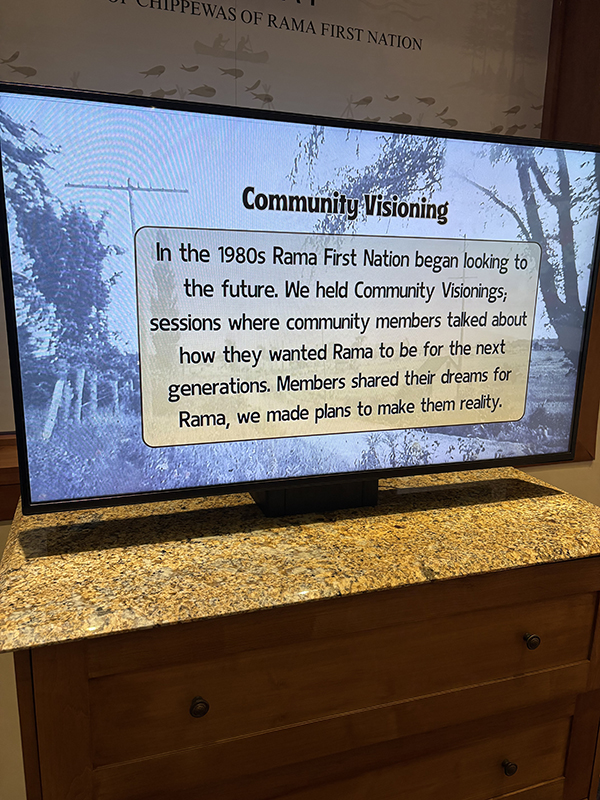
According to the displays, the casino’s opening in 1996 brought thousands of jobs and as many as 14,000 guests a day. That historical account helped the team appreciate the scale of the change and the responsibilities accompanying it. Increased activity required round-the-clock police, paramedic and fire services for residents and visitors.
Other panels described employment at the casino and within new community facilities and programs, improvements to infrastructure, and opportunities for children to be educated in Rama. They also highlighted access to post-secondary education and support for community members.
These accounts connected the places OECM visited with Rama’s longer history of planning for its future. They echoed Chief Williams’ reflections on purposeful leadership and showed how economic development can support priorities defined by the community.
“Taking the time to visit Rama and learn directly from community members helps us better understand the people and priorities behind our partnership with Rama Office Interiors,” said Patrice Likamshum, Director, Business Development, OECM. “Our ESGI principles call on us to build respectful relationships, keep learning and consider how procurement can support community wellbeing. Seeing how a community-owned business contributes to education, culture and care brought that connection to life and reinforced why these relationships matter.”
Luba Medvedeva, OECM’s Senior Manager of Business Development walking the ‘circle’ at Casino Rama that references the Seven Grandfather Teachings that are foundational Anishinaabe guiding principles.
OECM thanks Rama Office Interiors and the community members who welcomed the team and shared their knowledge. The visit deepened OECM’s understanding of Rama and reinforced the importance of listening, learning and building relationships with the communities behind its partnerships.
Want to join us on our learning journey? Learn more below:
OECM’s Environmental, Social, Governance, and Indigenous Commitment