Recently, the Government of Ontario introduced new procurement requirements under the Buy Ontario Act (Public Sector Procurement), 2025, including the Buy Ontario Procurement Directive and the Municipal Buy Ontario Procurement Directive. OECM has confirmed that all current agreements remain compliant and can continue to be used without disruption, with additional requirements applying only in specific cases such as fleet vehicles and capital infrastructure.
As part of OECM’s ongoing work to support customers under these directives, four Ontario-based manufacturers with products available through OECM’s Custodial and Janitorial Supplies, Equipment, and Related Services agreement invited OECM to visit their facilities and learn more about their operations.
This four-part series highlights those visits with Charlotte Products, Diversey, Dustbane Products, and M2 Professional Cleaning Products, and explores how they are supporting customer needs through local manufacturing, sustainability, and operational expertise.
This article highlights M2 Professional Cleaning Products and the company’s approach to Ontario manufacturing, customer-driven product development, and practical value through OECM’s custodial agreement.
M2 products are available through multiple awarded Supplier Partners on OECM’s Custodial and Janitorial Supplies, Equipment, and Related Services agreement.
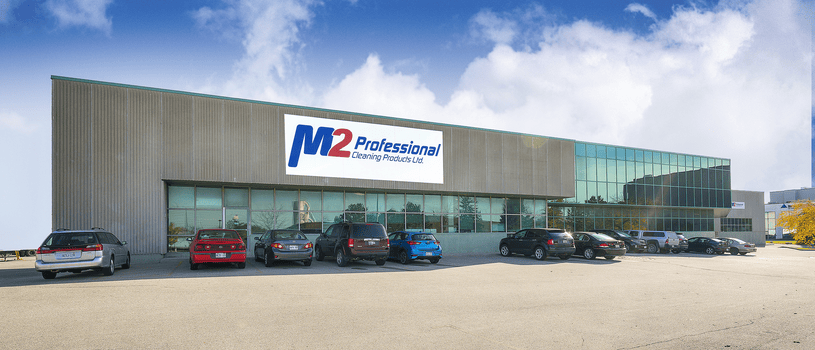
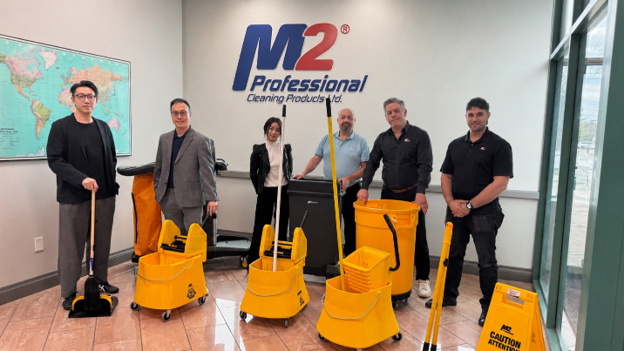
M2 Professional Cleaning Products, an Ontario manufacturer of professional cleaning tools and equipment, welcomed OECM to its facility in Vaughan, Ontario, for a closer look at local manufacturing, product design, and Bill 72 alignment. The visit was led by Michael Della Camera, Director of Sales Canada, and included Gabriel Marino, CEO, and Joseph Mazzuca, Account Manager.
The visit began with a presentation and discussion focused on Bill 72, Buy Ontario priorities, and the questions customers and distributors are now asking about Canadian-made and Ontario-made products. From there, the tour moved to the plant floor, where OECM saw how M2 manufactures a wide range of custodial and janitorial tools used across schools, municipalities, universities, and other broader public sector settings.
Bill 72 and customer questions
A strong starting point for the visit was M2’s discussion on how the company fits into the changing procurement landscape. The conversation centred on the uncertainty many customers are still working through, including how Ontario-made content will be measured, how Bill 72 will affect buying decisions, and how existing agreements can support customers as these requirements continue to take shape.
M2’s message was clear: in a category where many products are imported, its Ontario manufacturing footprint puts the company in a strong position to support customers looking for Canadian-made and Ontario-made options. That point came through not only in the discussion around legislation, but also in how the company described its role in helping distributors and customers navigate the shift.
“We’re the only Ontario manufacturer in our category that has the breadth of products that you’ll see today.”
– Michael Della Camera, Director of Sales Canada
That matters because M2’s custodial category is different from chemical manufacturing. M2’s focus is on the tools and hardware that support day-to-day cleaning – mops, brooms, buckets and wringers, garbage cans, dust mops, microfibre products, and other specialty cleaning tools. In that context, local manufacturing means faster access, more direct support, and less reliance on long overseas lead times.
From Marino Manufacturing to M2 Professional Cleaning Products
The visit also gave OECM a closer look at the company’s history as a family business. M2 Professional Cleaning Products was founded by Gabriel Marino and builds on the manufacturing experience established by his father, Sam Marino. After that company was sold, customer demand helped bring the family back into the professional cleaning tools and equipment business, leading to the launch of M2, the “second Marino.”
“After changes to the original business, many long-time customers encouraged Gabriel Marino to return to manufacturing. In response, Gabriel founded M2 Professional Cleaning Products. Operating from the same family-owned building, M2 invested in new machinery, new molds, and its own independent product line.”
– Gabriel Marino, CEO, M2 Professional Cleaning Products
That background still shapes the company today. The business remains family-run, decisions are made quickly, and the manufacturing operation continues to reflect a hands-on approach.
For OECM customers, that local ownership adds another layer to the Buy Ontario conversation, reinforcing not only where products are made, but also how closely the business remains connected to its customers and the professional cleaning needs they serve.
Working through supplier partners
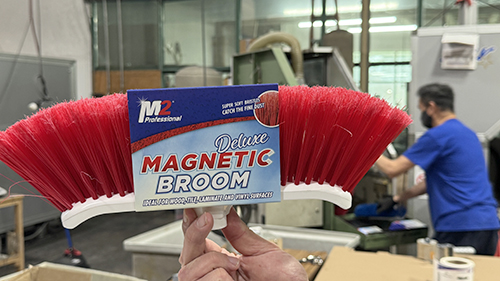
An important part of the discussion was M2’s emphasis on how it works with distributor and supplier partners. The company made clear that it does not sell directly to end users. Instead, it works through established supplier networks, supporting distributors with products, training, and end-user engagement while allowing customers to continue purchasing through their preferred supplier relationships.
That approach aligns well with how customers purchase through OECM’s agreement. M2 explained that it works with supplier partners on demos, product trials, and end-user education, while still respecting the supplier relationship and allowing purchases to flow through the customer’s preferred supplier partner.
That balance helps show how a local manufacturer can add value within an existing agreement structure rather than trying to work around it.
For OECM customers, this means that Ontario-made custodial products are already available through existing supplier relationships and procurement channels, making it easier to support Buy Ontario objectives through current agreements and awarded suppliers.
An Ontario manufacturer in a category with few local options
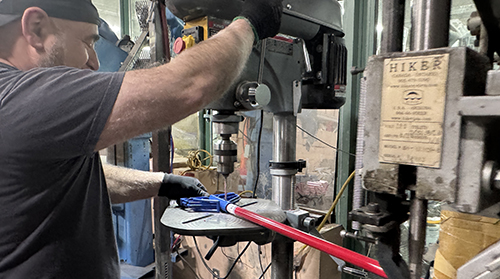
One of the clearest messages from the visit was that M2 sees local manufacturing as a practical advantage, not just a branding point. Because the company makes many of its core products in Ontario, it can respond more quickly to spikes in demand, avoid some of the delays tied to overseas shipping, and maintain greater control over supply.
That was positioned as especially important in a category where seasonality and large institutional orders can put pressure on supply. M2 explained that back-to-school periods, winter conditions, and seasonal cleaning needs can all create short-term surges in demand. Local production allows the company to respond more quickly when those moments happen.
The company also tied that advantage to broader sustainability and operational considerations. Less overseas shipping means lower freight exposure, fewer supply chain challenges, and a reduced carbon footprint, while local manufacturing helps support Canadian jobs and keeps more of that value in the domestic economy.
Products shaped by end-user needs
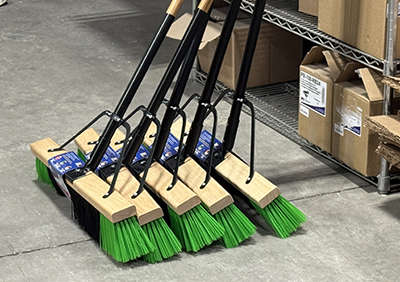
Another important part of the visit was seeing how closely product development is tied to end-user feedback. M2 explained that it regularly meets with school boards and other end users, often alongside distributor partners, to better understand what customers need and where existing products may be falling short. That approach helps the company add practical value to products that are often treated as commodities, whether through better ergonomics, improved hygiene practices, or a closer fit with day-to-day facility needs.
“We’re listening to the end users, and we’re developing products around what the needs are on the market.”
– Michael Della Camera, Director of Sales Canada
Ergonomic tools for modified workers
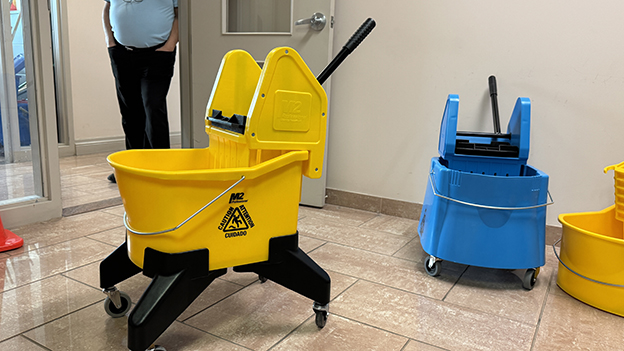
One example showcased during the visit was M2’s newer ergonomic bucket and wringer, developed in response to demand for more accessible and comfortable cleaning tools. The taller design helps reduce bending when wringing a mop head, making it a practical option for staff who require more ergonomic support, along with others looking for a more comfortable cleaning setup.
Colour-coded systems to support hygiene
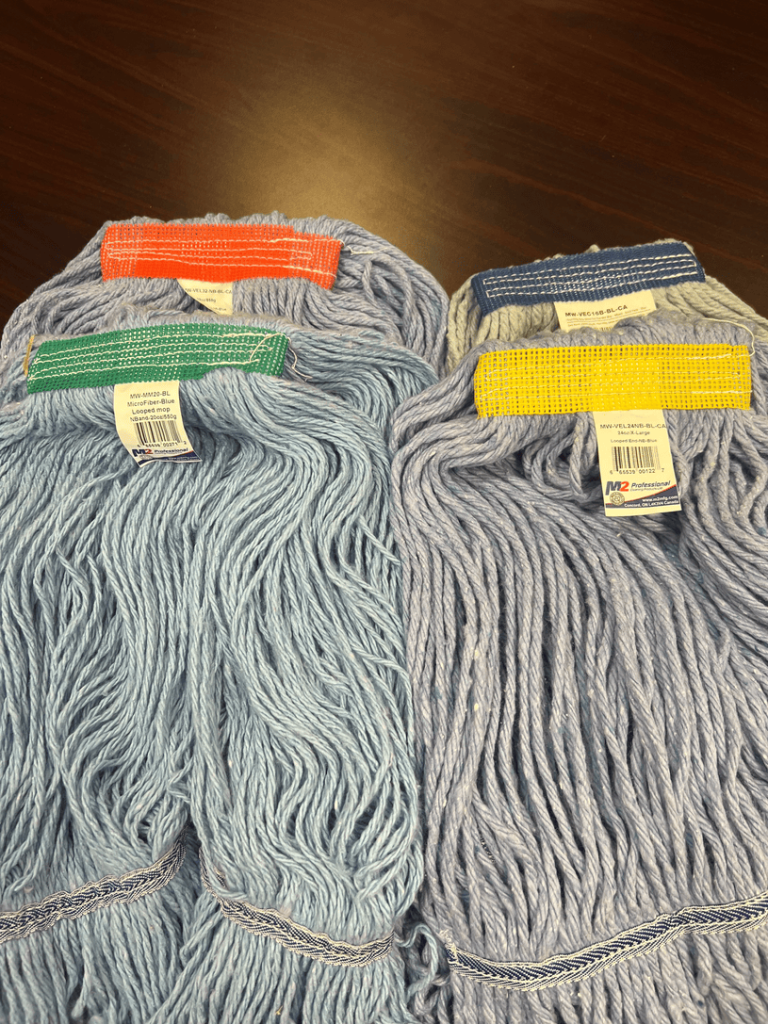
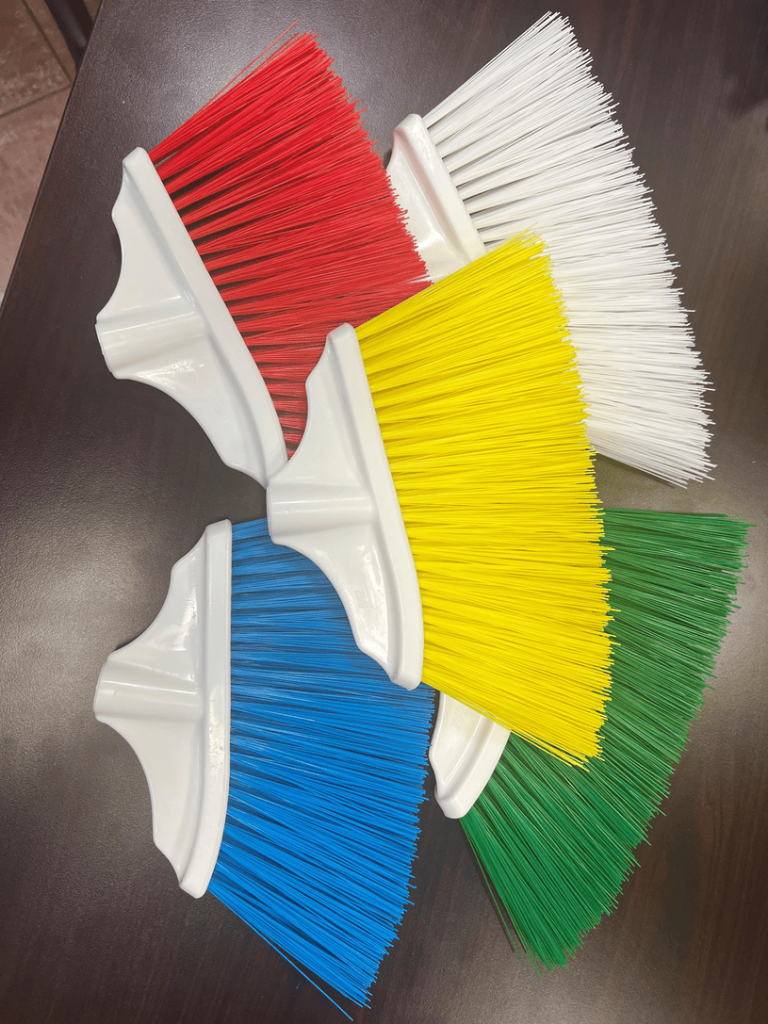
The visit also highlighted growing interest in colour-coded cleaning tools, particularly in schools, cafeterias, and other shared environments where reducing cross-contamination is a priority. M2 pointed to colour-coded systems as a simple way to help staff separate tools used in washrooms, classrooms, food service areas, and other spaces. Rather than adding complexity, the approach was presented as an easy-to-follow way to reinforce better hygiene practices and cleaner workflows.
Depth across the category
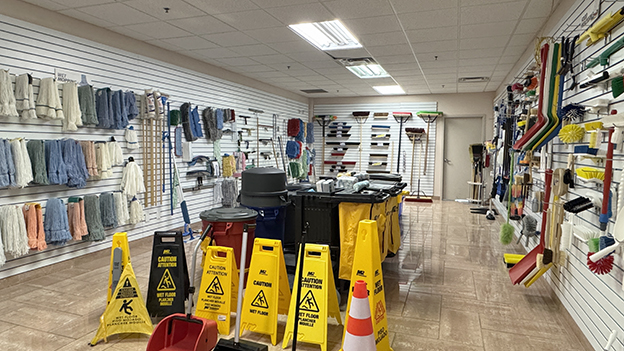
That same customer-led approach also helps explain the breadth of M2’s product offerings. The company carries approximately 2,000 SKUs and manufactures many of the high-volume core products customers rely on most often. From wet mops and dust mops to buckets and wringers, push brooms, garbage cans, microfibre systems, and other specialty cleaning tools, the focus is on supporting a wide range of cleaning tasks and environments.
That breadth matters because it means Ontario-made options are available across more of the cleaning program, not just in one or two categories. It also reinforces M2’s position as a specialist in professional cleaning tools and equipment, with products designed for institutional and industrial use rather than lighter consumer-grade alternatives.
On the plant floor
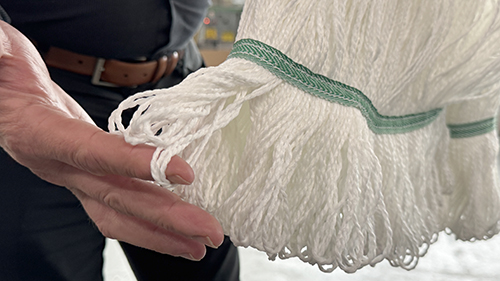
The plant tour made those capabilities more tangible. OECM saw raw materials staged for production, yarn and microfibre processing, mop manufacturing, broom assembly, and finished products ready for shipment. Several processes stood out, including loop-end mop production, lock-stitch microfibre construction designed to improve durability and reduce fibre loss, and broom assembly using industrial-grade components built for long-term use.
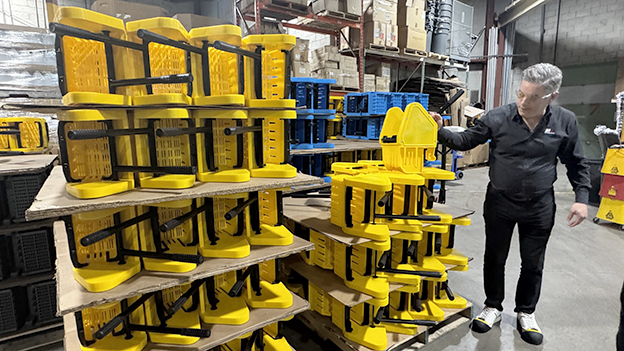
The tour also showed M2’s production of buckets, wringers, and waste containers, reinforcing that the company is not only assembling products, but manufacturing many of the tools customers use every day. With inventory on hand and core products made locally, the operation is set up to respond more quickly when distributor or customer demand increases.
Manufacturing and service working together
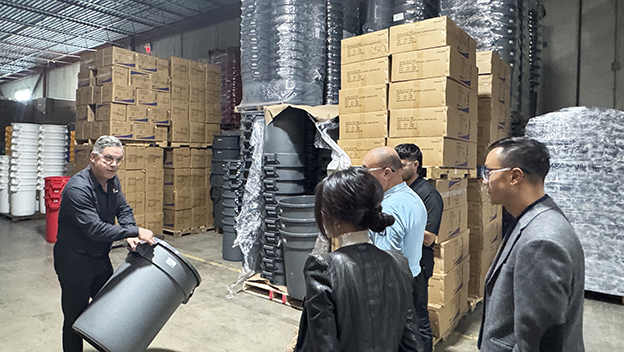
The visit showed how closely production and customer support are linked at M2. The company is not simply making tools in Ontario and sending them into the market — it is also meets with end users, testing new ideas, gathering feedback, and working through supplier partners to help ensure those products are being used effectively.
That approach helps turn a locally made product into a more complete solution, while also creating room for innovation in areas such as ergonomics, compatibility, colour coding, and application-specific performance.
Explore M2’s solutions through OECM’s agreement
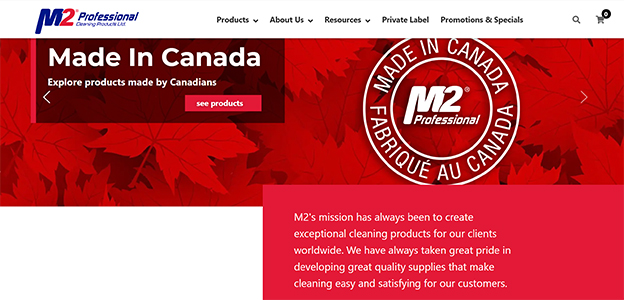
Customers looking for Ontario-made and Canadian-made custodial solutions can explore M2’s professional cleaning tools and equipment through the supplier partners on OECM’s Custodial and Janitorial Supplies, Equipment, and Related Services agreement. M2’s website also offers several ways to browse products and resources, including a Made in Canada section, literature, image/video library, private label information, promotions & specials, and product categories such as Buckets & Wringers, Wet Mops, Push Brooms, Waste Management, Floor Care, Microfibre, Window Cleaning, Material Handling, Food Service, Brushes, and Dusting.
Customers can also download M2’s latest product catalogue and connect directly with:
Michael Della Camera
Director of Sales Canada
Mobile: (437) 227-4946
Office: (844) 738-2007 ext. 268
Email: mike.dellac@m2mfg.com
Once ready to move forward, customers can then work through OECM’s Custodial and Janitorial Supplies, Equipment, and Related Services agreement and connect with your preferred awarded supplier partner(s) to discuss procurement options and next steps.