
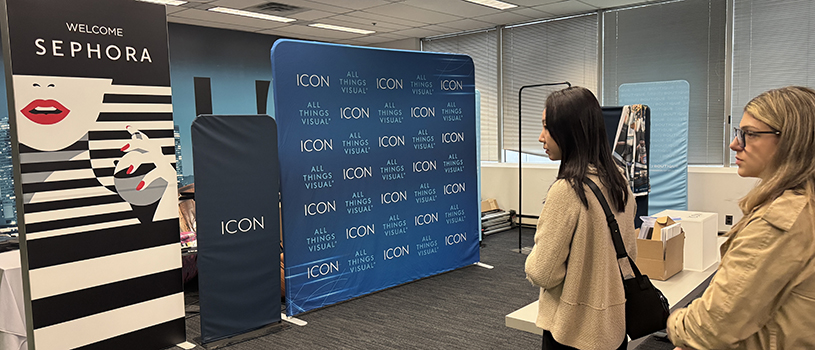
ICON Digital Productions Inc. is available through OECM’s Print Products, Signage and Related Services agreement, and ICON Media Communications Inc. is available through OECM’s Supply and Installation of Digital Signage, Digital Scoreboards and Audio-Visual System Solutions agreement.

OECM recently visited ICON Digital Productions and ICON Media Communications to gain a deeper understanding of how print, signage, digital technology, and custom-built visual solutions come together to support our public sector customers. The educational tour provided a behind-the-scenes look at how the two divisions work together to design, build, and maintain visual solutions across a wide range of environments.
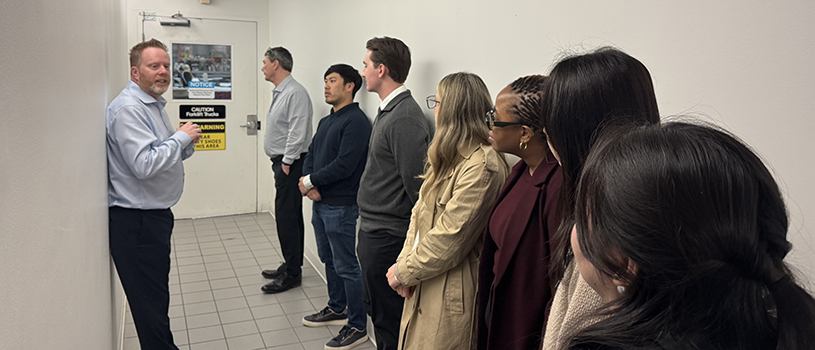
Led by the ICON team, the visit began with an overview of the company’s capabilities before moving into a facility tour, where OECM saw firsthand how concepts are transformed into finished installations.
“We like to consider ourselves all things visual. If it can go on a window, wall, or floor, that’s where we live.”
— Chris Lau, President, ICON Visual Communications Inc.
Two divisions, one integrated approach
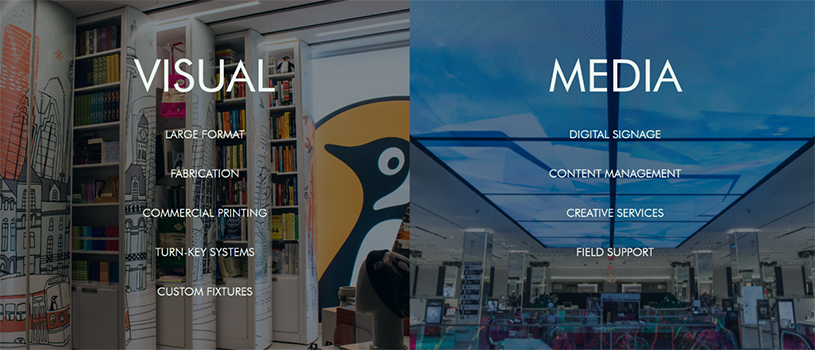
The first takeaway from the visit was how ICON Digital Productions and ICON Media Communications operate as two complementary divisions under one integrated model.
- ICON Digital Productions focuses on print, signage, fabrication, and large-format visual applications
- ICON Media Communications focuses on digital signage, content creation, and audio-visual solutions
For OECM customers, this means working with a single supplier partner capable of supporting everything from printed materials and space branding elements to large-scale digital displays and interactive content.
You don’t need a fully defined plan to get started
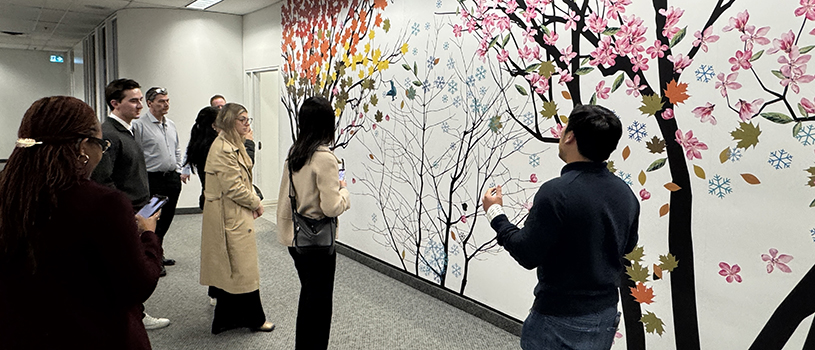
A key takeaway from the visit was that many projects start with a general idea, an underutilized space, or a need that has not yet been fully defined. You don’t need a fully defined plan to begin a project.
ICON emphasized that engaging early, even at the concept or drawing stage, allows customers to shape the solution more effectively.
“We’re not just taking a screen and hanging it on a wall. We look at the space and what the customer is trying to achieve.” — Chris Fatsis, Manager, National Accounts, ICON Media Communications Inc.
Rather than starting with a predefined product, the process begins with understanding the space, how it will be used, and what the customer is trying to achieve. From there, ICON works through concept development, technical planning, and coordination with internal teams and contractors to bring the vision to life.
Early engagement helps avoid redesign and rework while making it easier to align solutions with both budget and long-term use.
At this stage, ICON can:
- review layouts and identify opportunities for integration
- recommend technologies and materials based on use and budget
- flag technical requirements such as power, cabling, and mounting
- help plan for future flexibility and updates
While projects can still be supported on shorter timelines, engaging early allows for smoother implementation and more effective use of available budgets.
Static and dynamic working together
Another key theme from the visit was how ICON combines static and digital elements to create more cohesive and functional spaces. The team illustrated this through examples from their past projects, showing how print, signage, and digital displays can be designed together to support communication, wayfinding, branding, and user experience.
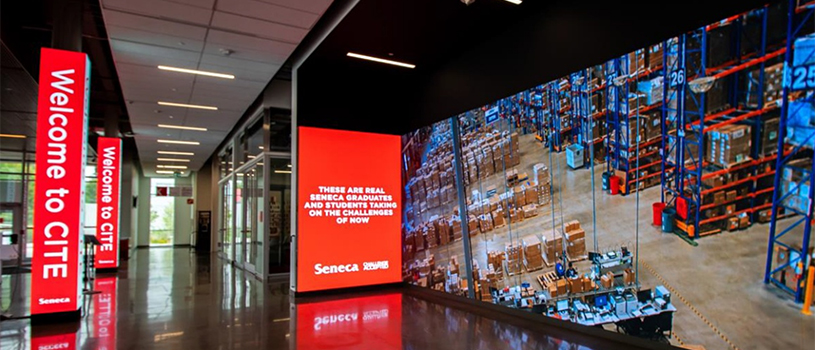
At Seneca College’s Newnham campus, the team transformed a previously underutilized space into a more immersive environment by combining:
- large-format digital displays
- custom-designed LED features
- integrated wall graphics and space branding elements
The process began with scanning the space and developing digital concepts that could be visualized within the physical environment. From there, ICON created detailed drawings and worked with internal teams and contractors to bring the design to life.
The result was a space that not only showcased student work, but also improved navigation and engagement through digital wayfinding, interactive screens, and integrated content.
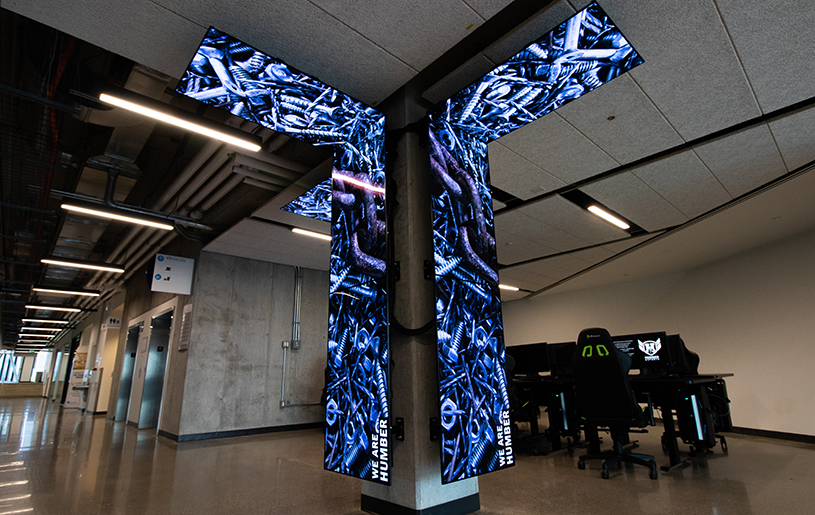
ICON also highlighted work with Humber College, demonstrating how print and material selection can be used to transform spaces while maintaining functionality. One example included the use of fabric-based graphics applied to windows, allowing natural light to pass through while still delivering strong visual branding.
These types of applications are particularly useful in environments where transparency, light, and aesthetics all need to be balanced. Rather than blocking visibility, the materials can enhance the space while still supporting communication and design goals.
This example highlights how different materials, not just digital or structural elements, can play a role in shaping the overall look and feel of a space
Outdoor and public space applications
The visit also highlighted ICON’s work in outdoor and public environments, where durability, design, and integration with existing infrastructure are critical.
To illustrate this, ICON shared examples from past projects, including outdoor digital kiosks installed for large institutional environments. These projects required careful coordination to ensure the technology blended seamlessly into the surrounding space, from matching exact colours and finishes to working within existing site constraints.
In one example, installations required:
- custom-built enclosures designed to match the surrounding architecture
- integration with existing content management systems
- underground cabling and infrastructure to maintain a clean visual appearance
- durable materials capable of withstanding outdoor conditions
These types of projects demonstrate the level of planning and coordination required when working in public-facing spaces, where both performance and aesthetics must be considered.
For municipalities and public institutions, these applications highlight how digital and physical signage can be integrated into outdoor environments to support wayfinding, communication, and community engagement, while maintaining long-term performance and reliability.
Design, build, manage, and maintain
ICON’s process extends beyond installation. The company follows a full lifecycle approach:
- Design: Concept development and visualization
- Build: Fabrication and system integration
- Manage: Content creation, scheduling, and system oversight
- Maintain: Ongoing monitoring, service, and support
A standout part of the visit was ICON’s operations centre, where digital networks are monitored in real time. The team described it as a centralized control environment, with multiple screens tracking performance across hundreds or even thousands of digital displays.
From this space, ICON monitors:
- screen status and uptime across locations
- active service tickets and maintenance needs
- content performance and system activity
- real-time alerts when issues occur
The operations centre runs 24/7, including holidays, allowing the team to identify and respond to issues proactively (often before customers are even aware there is a problem.)
This level of visibility is particularly valuable for customers managing multiple sites or high-traffic environments, where downtime or display issues can impact operations, communication, or revenue.
The team also demonstrated how dashboards can be customized for each customer, giving them access to real-time system insights when needed. In cases where systems are more complex or spread across multiple locations, ICON can integrate and manage different platforms from a single control point.
Beyond the hardware, the team emphasized that successful digital installations require ongoing attention. Content, scheduling, and system management play a critical role in ensuring these systems continue to deliver value over time.
Built on experience and relationships
The visit underscored the importance of experience and long-term relationships in delivering successful projects.
ICON works across multiple sectors, including education, municipalities, transportation, and sports, and is involved in large-scale initiatives such as partnerships with Team Canada and major retail organizations.
Much of its growth comes from referrals and repeat customers, reflecting a focus on:
- transparency
- collaboration
- long-term value
“We’re big enough to get the job done and small enough to care.”
— Brad Todgham, Account Executive, ICON Visual Communications Inc.
ICON also emphasized a value-based approach, helping customers understand trade-offs and select solutions that meet both immediate needs and long-term expectations.
Explore ICON’s solutions through OECM’s agreements
Through OECM’s competitively sourced and compliant agreements, customers can access a range of supplier partners offering print, signage, digital signage, and audio-visual solutions, including ICON.
These agreements allow customers to explore solutions, discuss project needs, and develop concepts with supplier partners while maintaining flexibility for customized, project-specific outcomes.
- View Print Products, Signage and Related Services
- View Supply and Installation of Digital Signage, Digital Scoreboards and Audio-Visual System Solutions
Interested in Hosting an OECM Educational Tour?
OECM is always eager to learn more about our supplier partners and OEMs. If you are a supplier partner or OEM on one of our agreements and would like to host an OECM Educational Tour or event, please reach out to your OECM Supplier Relationship Manager.