Recently, the Government of Ontario introduced new procurement requirements under the Buy Ontario Act (Public Sector Procurement), 2025, including the Buy Ontario Procurement Directive and the Municipal Buy Ontario Procurement Directive. OECM has confirmed that all current agreements remain compliant and can continue to be used without disruption, with additional requirements applying only in specific cases such as fleet vehicles and capital infrastructure.
As part of OECM’s ongoing work to support customers under these directives, four Ontario-based manufacturers with products available through OECM’s Custodial and Janitorial Supplies, Equipment, and Related Services agreement invited OECM to visit their facilities and learn more about their operations.
This four-part series highlights those visits with Charlotte Products, Diversey, Dustbane Products, and M2 Professional Cleaning Products, and explores how they are supporting customer needs through local manufacturing, sustainability, and operational expertise.
This article highlights Diversey and the company’s approach to Ontario manufacturing, innovation in cleaning technologies, sustainability-focused solutions, and operational support for public sector organizations through OECM’s custodial agreement.
Diversey products are available through Bunzl Canada Inc., Flexo Products Ltd., Grand & Toy Ltd., Holland Cleaning Solutions Ltd., Imperial Dade Canada Inc., Superior Sany Solutions, a division of Imperial Dade Canada Inc., and Swish Maintenance Ltd. on OECM’s Custodial and Janitorial Supplies, Equipment, and Related Services agreement.
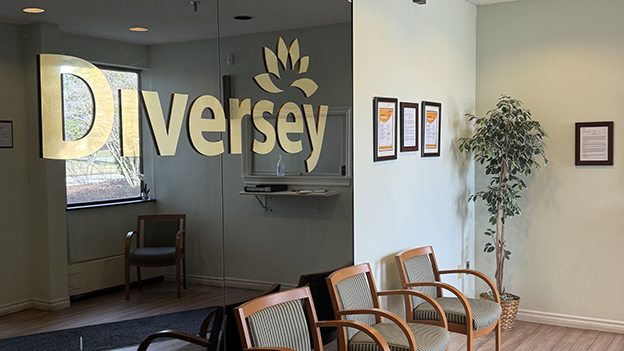
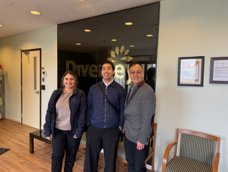
Diversey, a global manufacturer of cleaning, sanitation, and infection prevention solutions, welcomed OECM’s Supplier Relationship Management (SRM) team for an on-site tour and operational discussion, providing a behind-the-scenes look at the manufacturing, distribution, and innovation supporting institutional cleaning programs across Ontario’s public sector.
The visit also offered OECM an opportunity to better understand Diversey’s Ontario manufacturing footprint and how locally produced custodial and disinfectant products support customers seeking Ontario-made procurement options under the Buy Ontario Act.
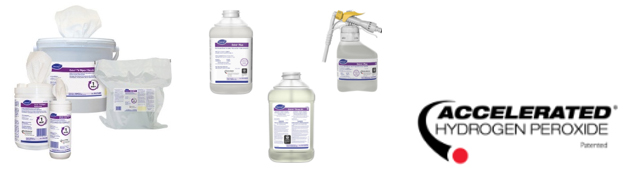
Diversey shared that more than 80% of the chemicals it sells in Canada are manufactured in Ontario, primarily through its London production facility and the Virox manufacturing facility in Oakville, where Oxivir and AHP disinfectants are produced.
For OECM customers, especially those operating large institutional environments, that local manufacturing presence helps support continuity, responsiveness, and supply reliability at a time when organizations are paying closer attention to procurement resilience and operational risk.
Supporting Ontario’s Public Sector Through Local Operations
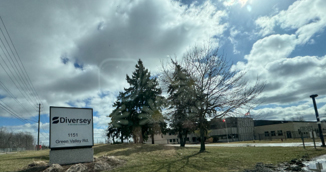
The London facility manufactures and distributes a wide range of cleaning and sanitation products used throughout the education, healthcare, municipal, and food service sectors. During the visit, OECM observed how manufacturing operations, warehousing, inventory planning, and distribution systems work together to support public sector customers across Ontario and Canada.
The discussion highlighted how local production can help organizations improve supply continuity while also supporting broader procurement goals tied to Ontario-made purchasing initiatives.
For customers managing complex institutional operations, reliable access to cleaning and disinfectant products remains critical, particularly as organizations continue balancing budget pressures, sustainability targets, and evolving health and safety expectations.
Dispensing Systems Improve Cost Control
A major focus of the tour was the growing importance of dilution control systems and highly concentrated cleaning products in large institutional environments.
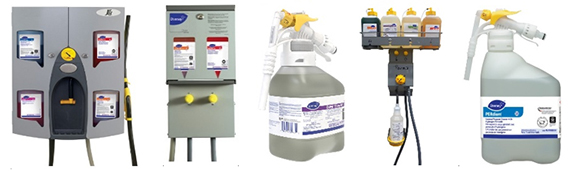
OECM observed Diversey’s dispensing technologies, including systems such as J-Fill, which automate chemical dilution to ensure products are dispensed at the correct concentration every time. These systems help improve consistency while reducing chemical waste, overuse, and unnecessary operational costs.
The discussion also emphasized the difference between upfront product pricing and true cost-per-use.
“What matters isn’t the price on the bottle — it’s the actual cost per use. Highly concentrated products dramatically reduce total spend when used correctly.”
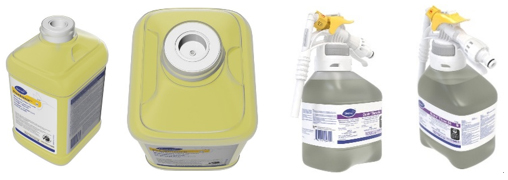
Highly concentrated cleaning products can significantly reduce packaging requirements, transportation needs, storage demands, and chemical consumption when compared to traditional ready-to-use formats.
For public sector organizations operating multiple facilities, those efficiencies can translate into measurable operational savings while also supporting sustainability and workplace safety goals.
Training and Facility Audits Are Critical
Diversey representatives emphasized that their approach extends beyond product supply. The company regularly works alongside customers through facility audits, on-site demonstrations, custodial staff training, and program reviews designed to help organizations optimize cleaning performance and standardize processes across facilities.
This hands-on support is particularly valuable for school boards, municipalities, healthcare organizations, and post-secondary institutions managing large custodial operations where consistency, training, and operational efficiency remain ongoing priorities.
“We spend a lot of time auditing facilities, training staff, and demonstrating best practices. It’s not just about selling products — it’s about helping customers solve long-term operational problems,” said Brian Walsh, Market Manager, Central Canada, Diversey – A Solenis Company.
The visit reinforced how supplier expertise, operational transparency, and collaborative support can help organizations move beyond transactional purchasing toward more strategic and sustainable cleaning programs.
Innovation in Cleaning Technology
The tour also highlighted several emerging technologies shaping the future of institutional cleaning programs.
OECM observed robotic cleaning equipment, automated dispensing systems, diamond pad floor care technologies, and high-efficiency cleaning formulations designed to improve cleaning outcomes while reducing labour demands and environmental impact.
The discussion reflected broader industry trends toward smarter cleaning systems that support operational efficiency, consistency, and sustainability without compromising cleaning performance.
Diversey also highlighted how innovation continues to shape product development across infection prevention, floor care, hand hygiene, and facility cleaning solutions used throughout the public sector.
Sustainability and ESGI Are Increasingly Important
Sustainability was another major focus throughout the visit.
Diversey shared how environmental considerations are increasingly being integrated into both product development and customer programs through concentrated chemical formulations, reduced packaging, low-VOC products, and systems designed to lower water and chemical consumption.
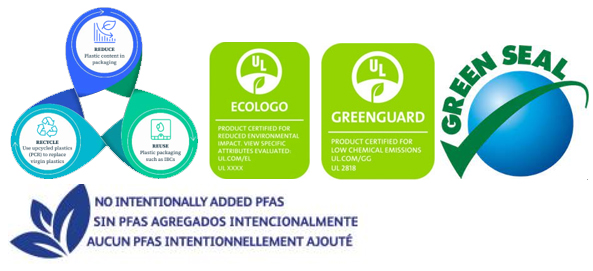
They also discussed how newer floor care technologies and dispensing systems can help reduce waste, improve indoor air quality, and minimize environmental impact across large institutional facilities. A large number of Diversey products have 3rd party certifications from EcoLogo, Green Seal and Greenguard.
“Every new program must deliver a measurable sustainability benefit — whether that’s reducing chemicals, cutting waste, or improving indoor air quality,” said Brian Walsh, Market Manager, Central Canada, Diversey – A Solenis Company.
For OECM customers, particularly in education and healthcare environments, these initiatives connect operational cleaning programs with broader ESGI goals related to sustainability, health, safety, and operational efficiency.
On the Plant Floor
The plant tour itself provided OECM with a firsthand look at the manufacturing and packaging processes behind many of the custodial products used throughout Ontario’s public sector.
The tour included chemical blending operations, batch production systems, automated filling and packaging lines, palletization areas, and finished product staging operations supporting customer distribution across Canada.
OECM also observed quality control procedures, safety protocols, and environmental practices related to chemical handling, product consistency, storage, and waste reduction.
The visit demonstrated how manufacturing operations, automation, inventory planning, and supply chain coordination work together to support continuity and reliability for customers managing large institutional cleaning programs.
At a time when organizations are paying closer attention to Ontario-made procurement, supply resilience, and operational continuity, the visit offered valuable insight into the infrastructure supporting many of the cleaning and disinfectant products used across the province’s public sector.
Explore Diversey’s solutions through OECM’s agreement
For OECM customers looking to strengthen custodial and infection prevention programs with Ontario-made and Canadian-supported solutions, Diversey offers a range of products, technologies, and operational support resources designed for institutional environments.
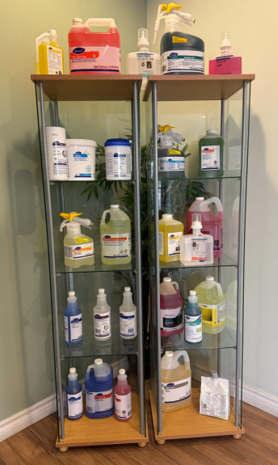
Customers can explore Diversey’s cleaning chemicals, dispensing systems, floor care technologies, hand hygiene solutions, and disinfectant products through OECM’s Custodial and Janitorial Supplies, Equipment, and Related Services agreement.
Once ready to move forward, customers can connect with OECM’s awarded supplier partners to discuss procurement options, product demonstrations, and next steps.