
Recently, the Government of Ontario introduced new procurement requirements under the Buy Ontario Act (Public Sector Procurement), 2025, including the Buy Ontario Procurement Directive and the Municipal Buy Ontario Procurement Directive. OECM has confirmed that all current agreements remain compliant and can continue to be used without disruption, with additional requirements applying only in specific cases such as fleet vehicles and capital infrastructure.
As part of OECM’s ongoing work to support customers under these directives, four Ontario-based manufacturers with products available through OECM’s Custodial and Janitorial Supplies, Equipment, and Related Services agreement invited OECM to visit their facilities and learn more about their operations.
This four-part series highlights those visits with Charlotte Products, Diversey, Dustbane Products, and M2 Professional Cleaning Products, and explores how they are supporting customer needs through local manufacturing, sustainability, and operational expertise.
This article highlights Dustbane Products and the company’s approach to Canadian manufacturing, ESGI-aligned programs, and measurable customer value through OECM’s custodial agreement.
Dustbane products are available through Bunzl Canada Inc., Grand & Toy Ltd., Imperial Dade Canada Inc., and Staples Canada ULC dba Staples Professional on OECM’s Custodial and Janitorial Supplies, Equipment, and Related Services agreement.
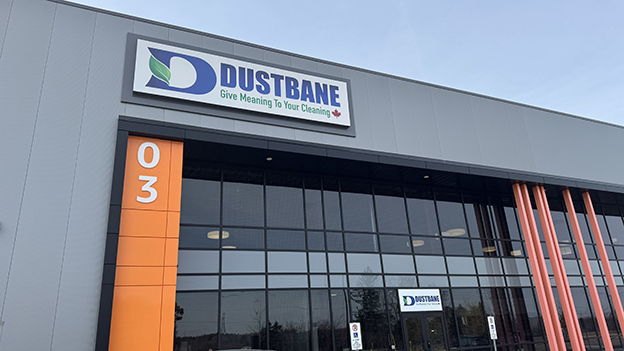
Dustbane Products, a Canadian manufacturer of commercial cleaning products and equipment, welcomed OECM to its Ottawa facility for a closer look at how the company approaches Canadian manufacturing, customer value, ESGI alignment, and long-term supply resilience. The visit was led by Shannon Hall, Executive Vice President, Sales & Marketing.
Bunzl Canada, an awarded supplier partner on the agreement, arranged the visit and was also represented by Cameron Morris, General Manager, and David L. Smith, Cleaning Hygiene & Sanitation Director KCE, Eastern Canada.
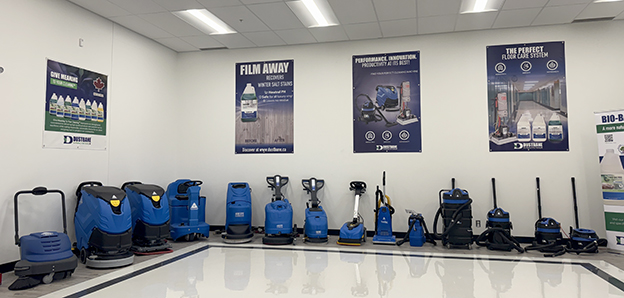
The visit gave OECM a closer look at how Dustbane is approaching locally made custodial solutions, ESGI-aligned programs, and tools that help organizations better understand total cost of ownership, sustainability impact, and supply resilience. Shannon also spoke about the pressures customers are facing, including budget constraints, supply chain disruption, and Buy Ontario and Buy Canadian priorities. The discussion also highlighted growing customer interest in understanding how these considerations can be incorporated into day-to-day procurement and operational decisions.
Locally made in Ottawa since 1908
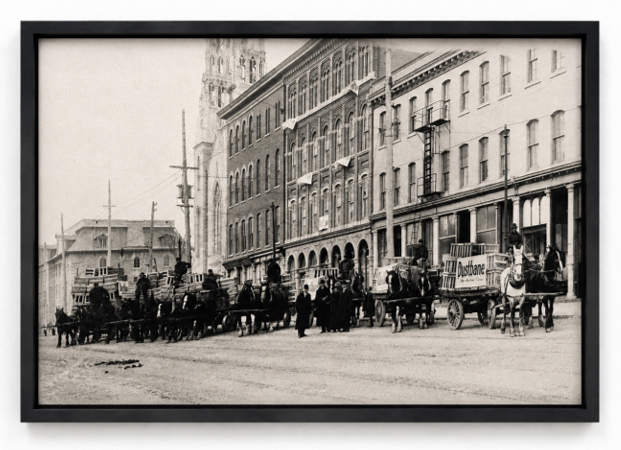
Dustbane’s story is rooted in Ottawa, where the company has been operating since 1908. Originally established on Sussex Street, Dustbane has grown into a proudly Canadian, family-owned manufacturer of commercial cleaning products and equipment. That legacy continues to shape the company today, with a strong focus on improving the customer experience through its people, products, and processes, while also making an impact through sustainable practices and broader initiatives.
That local footprint matters in the context of Bill 72 because it speaks not only to where products are made, but also to continuity, responsiveness, and long-term investment in Canadian operations.
“We are a true Canadian manufacturer, and our vision really is to be the most loved and trusted name when it comes to cleaning in Canada.”
— Shannon Hall, Executive Vice President, Sales & Marketing, Dustbane Products Ltd.
That wording closely reflects Dustbane’s vision: to be the most loved and trusted name in Canadian cleaning, while making it easy for every customer to protect people, the environment, and give something back with every clean.
Cost savings that procurement and finance can defend

Dustbane’s approach is grounded in what customers are really trying to solve – budget constraints, hidden costs, labour pressure, and the need to show value across the organization. From there, Shannon drew a clear distinction between lowest price and lowest cost.
“It’s really understanding the lowest cost versus the lowest price. Lowest price is my $5 jug. Lowest cost is all of those elements underneath the jug price.”
Rather than focusing only on the upfront cost of a product, the discussion looked at the broader factors that shape the total cost of a cleaning program, including acquisition, operation, training, documentation, packaging, dilution, transportation, and waste. The point was not simply to buy something cheaper, but to reduce cleaning costs without compromising specification, quality, or purpose.
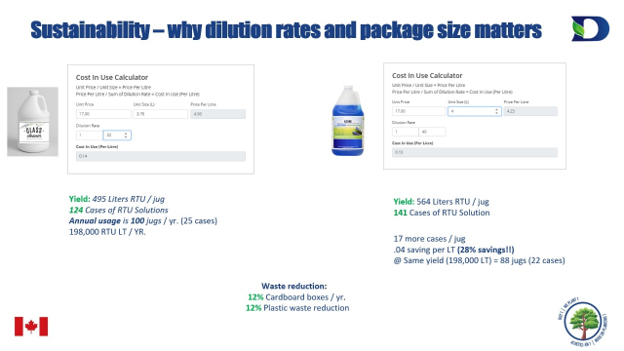
Shannon then walked through examples showing how small changes can lead to significant results for customers. One example highlighted a school board spending $250,000 annually on cartridge soap, where one change resulted in $150,000 in annual savings, along with reduced waste, reduced packaging, and a more sustainable solution over time. Another example compared a common 3.78L glass cleaner with Dustbane’s 4L Azure, showing how dilution rate and package size can affect yield, waste, and cost in use, including 28% savings per litre and 12% reductions in cardboard and plastic waste.
For customers trying to defend program choices internally, those are practical, measurable results.
ESGI in action
Dustbane’s sustainability story was one of the clearest takeaways from the visit. The discussion highlighted how the company approaches sustainability through sustainable cleaning solutions, community programs and initiatives, mentorship and training, and broader alignment with the United Nations Sustainable Development Goals.
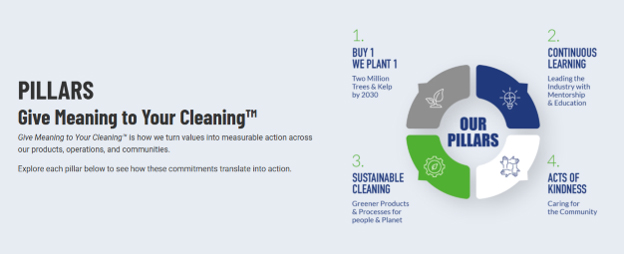
Dustbane brings that work together under Give Meaning To Your Cleaning™, a commitment that guides the company’s approach across its operations. OECM was walked through four connected pillars:
- Buy 1 We Plant 1 – links eligible purchases to tree and kelp restoration
- Continuous Learning – training, certifications, and customer education
- Sustainable Cleaning Products and Processes – lower-impact products and practices
- Acts of Kindness – Dustbane’s community support efforts
One pillar highlighted was the Buy 1 We Plant 1 Program. The program connects eligible product purchases to longer-term environmental outcomes at no extra cost to customers, and Dustbane had already surpassed the one million mark in trees (with a goal to plant 2 million trees) and kelp planted.
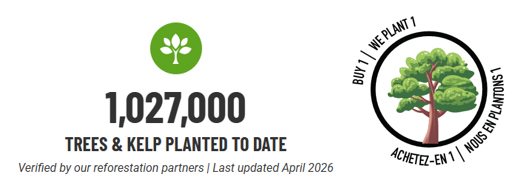
OECM also heard about the program’s newer kelp restoration component on British Columbia’s Sunshine Coast, where every 2L of Dustbane’s ModularFlex Series products and Bio-Bac contributes to this work. The initiative also includes a partnership with the Sechelt First Nation, showing how a routine cleaning purchase can support a Canadian restoration effort with longer-term environmental impact.
Calculators that help customers see the impact
One of Dustbane’s strongest differentiators is its use of practical tools and calculators that help customers quantify impact. OECM saw how these resources connect purchasing decisions to measurable results such as carbon offset, kelp restoration impact, plastic diversion, and true cost in use. That made the ESGI conversation more tangible by showing how routine cleaning choices can be linked to something measurable and brought into internal reporting, planning, and broader environmental conversations.
For OECM customers, that adds another layer of value. Packaging, concentration, dilution, and dispensing were all connected back to both cost and environmental impact, showing how small changes in a cleaning program can support broader operational and sustainability benefits.
To explore these tools further, customers can visit Dustbane’s sustainability resources and try the Carbon Impact Calculator, Kelp Impact Calculator, and Plastic Diversion Calculator.
Cleaner spaces, safer spaces
Another discussion was around scent-free environments. Shannon pointed out that many public institutions have scent-free policies, then asked why that same thinking often does not always extend to cleaning chemicals. She connected the issue not only to policy, but also to indoor air quality, asthma-related triggers, and product choices that support equity and inclusion for those who “live, learn, and love your campus.”
For OECM customers, especially in education and healthcare settings, this adds another practical layer to the buying conversation. It shows how cleaning choices can support safer, healthier indoor environments alongside operational and sustainability goals.
Training, standards, and support that stick
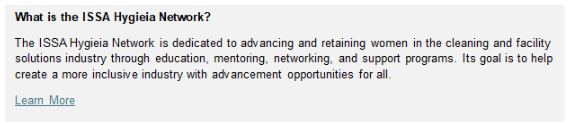
The visit also went beyond products and into training, mentorship, and industry standards. Shannon spoke about continuous learning as a core part of Dustbane’s approach, including training, certifications, networking opportunities, end-user education, and support for women in the cleaning industry through the ISSA Hygieia Network.
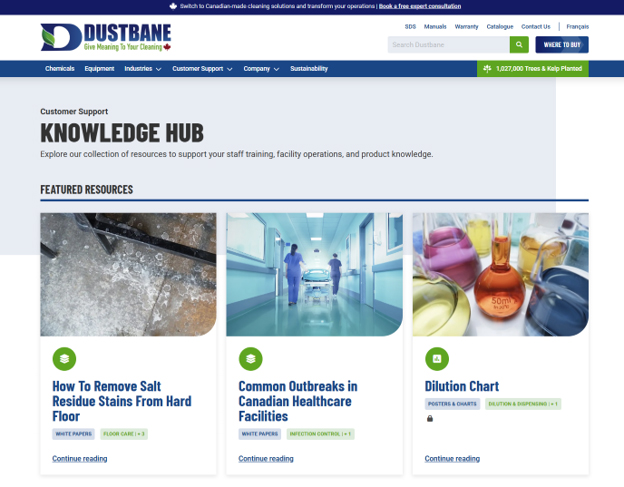
Shannon also walked us through Dustbane’s Knowledge Hub, which includes resources such as Safety Data Sheets (SDS), manuals, dilution charts, instructional videos, and ROI calculators to support informed decision-making and operational consistency.
For customers, this is where the relationship becomes especially valuable. It is not just about product selection. It is also about getting the tools, guidance, and support that help create clearer processes and training that stick. Shannon also connected CIMS to training, succession planning, and broader facility goals, including carbon offset, transportation reduction, and equity.
On the plant floor
The plant tour itself made the broader story tangible. OECM saw multiple filling lines dedicated to different formats, raw material and finished goods areas, a heated room used to liquify certain materials before batching, and Dustbane’s wastewater treatment system, which captures and treats production waste before discharge.
It also showed how local manufacturing, inventory planning, safety, and sustainability are tied together in a way that supports continuity and helps reduce risk. That is especially meaningful at a time when public sector organizations are paying closer attention to compliance, supply resilience, and the broader question of how tariffs, supply chain disruption, and rising fuel and energy costs may affect their supply chain.
Explore Dustbane’s solutions through OECM’s agreement
For OECM customers looking to strengthen custodial programs with Ontario-made and Canadian-made solutions, Dustbane offers several ways to explore its products and support resources. Customers can browse Dustbane’s chemicals and equipment, download its catalogue, request a quote, book a demo, or book a free expert consultation.
Once ready to move forward, customers can then work through OECM’s Custodial and Janitorial Supplies, Equipment, and Related Services agreement and connect with the awarded supplier partners to discuss procurement options and next steps.