Insights for procurement professionals navigating a more complex buying environment

Public procurement is under more pressure than ever to deliver value on multiple fronts.
Organizations are being asked to stretch budgets further, strengthen supply continuity, respond to policy changes, adopt new technologies responsibly, and support broader environmental and social goals – all while maintaining fairness, transparency and accountability.
This environment is reshaping procurement’s role. It is no longer defined solely by compliance or achieving cost savings in isolation. Procurement teams must balance cost, risk, supplier capability, innovation and sustainability, while also providing market insight, supporting planning, and helping internal stakeholders navigate growing complexity. Procurement is increasingly a strategic function that supports organizational resilience, operational performance, and public value.
For public sector organizations, that responsibility is especially significant. Procurement decisions affect not only budgets and operations, but also service delivery, public trust, and broader policy outcomes.
OECM was created in 2006 to help drive savings and supply chain value for Ontario’s publicly funded education institutions (School Boards, Colleges and Universities) and Broader Public Sector (BPS) organizations. Over the last twenty years, our approach has evolved alongside the changing face of procurement – from a primarily transactional function to a recognized strategic driver of organizational resilience, operational performance, and public value.
Today, OECM is pioneering transformative procurement initiatives that redefine value beyond savings by harnessing the power of business intelligence to make stronger data and analytics-driven decisions, prioritizing partnerships, strengthening supplier and customer relationships, and investing in resources with broader skill sets while focusing firmly on the power of collaboration.
Below are five of the most important trends shaping procurement right now – and what they mean for public sector procurement professionals.
1. Economic uncertainty is keeping resilience front and centre

While some market conditions have stabilized, procurement teams are still operating in an environment shaped by uncertainty. Inflationary pressures, budget constraints, shipping variability, labour shortages, and geopolitical disruption continue to affect availability, lead times and pricing across many categories.
For public sector organizations, these challenges can directly impact service delivery, capital projects, operations and frontline teams. As a result, resilience has become a core component of procurement strategy.
Procurement professionals are increasingly being asked to look beyond short-term price and consider broader supply risk. This includes understanding supplier capacity, monitoring market conditions, building flexibility into contracts, and exploring strategies such as cooperative purchasing, second-source options, and stronger demand planning.
OECM’s collaborative procurement model supports this approach by providing access to pre-qualified suppliers, aggregated demand, and established agreements that help reduce sourcing timelines and improve supply continuity. Navigating change, including legislative policies, digital transformation, Indigenous partnerships, and sustainability, were key topics at OECM’s 3rd Annual Procurement Summit, where more than 120 senior procurement professionals from across Ontario’s broader public sector came together to explore the rapidly evolving public sector procurement landscape. A recurring theme: Procurement is more than just transactions; it’s about transformation.
In practical terms, resilience is now part of how organizations define value. Lowest cost alone is rarely enough when the risk of delay, disruption, or poor supplier performance can lead to much larger consequences later. Procurement teams that can help their organizations think in terms of total value, continuity and readiness will be better positioned to support stronger outcomes.
The takeaway is clear. The strongest procurement strategies are those that help organizations remain agile and prepared when market conditions shift.
2. Legislative and trade changes are increasing procurement complexity
Another major trend is the growing impact of changing legislation, trade rules and protectionist policies on procurement decisions.
Domestic preferences, security considerations, regulatory updates and evolving compliance obligations can all affect how public sector procurements are structured and evaluated. In some categories, this may influence supplier availability, sourcing strategies, evaluation criteria or contract terms. In others, it may affect how organizations assess risk, define mandatory requirements, or manage cross-border sourcing.
This starts with a strong understanding of the policy and legislative landscape, but it also requires closer collaboration with internal stakeholders. Procurement, legal, finance, policy and operational teams all need to be aligned earlier to ensure procurements are both compliant and practical.
This trend also reinforces the need for ongoing market awareness. Procurement professionals need to understand not only what their organization needs to buy, but how broader policy changes may affect the supplier market’s ability to respond.
OECM supports this need by staying on top of policy changes and embedding compliance into its sourcing processes and agreement structures. Standardized documentation, clear evaluation methodologies, and alignment with applicable directives and trade obligations help customers navigate complexity with greater confidence while reducing administrative burden. For example, in line with government policy updates that prioritize Canadian suppliers, OECM has focused on strengthening domestic supply chains and improving resilience across its agreements, enhancing the OECM Marketplace to make it easier for customers to identify and engage with Canadian suppliers.
As rules continue to evolve, procurement professionals will need to stay closely attuned to how legislation and public policy are shaping the supplier marketplace – and how sourcing strategies need to adapt in response.
3. Artificial intelligence is becoming a practical procurement consideration

Artificial intelligence (AI) is rapidly moving from a conceptual topic to an operational reality for procurement teams.
On one hand, AI is creating opportunities within the procurement function itself. Teams are beginning to explore how AI can support market research, spend analysis, document review, forecasting and administrative efficiency. On the other hand, procurement teams are also being asked to source AI-enabled solutions for their organizations. This introduces new questions around transparency, data governance, privacy, bias, and ongoing contract oversight.
These are not minor considerations, particularly in public sector settings where accountability and public confidence matter.
AI cannot be approached like any other standard technology purchase. Procurement teams need to carefully consider the problem being solved, whether AI is necessary, how risk will be managed, what supplier assurances are needed, and how performance will be monitored over time.
OECM is actively monitoring this evolving space. It has been proactive in adopting new and emerging technologies and automation, harnessing digital tools and workflows, centralizing data, and automating processes to streamline operations, improve scalability, enhance accuracy, and support better decision-making. These capabilities have significantly reduced manual effort and enabled capacity for high-value, strategic work, enhancing business development, customer engagement, and supplier management. Learn more about OECM’s approach to technology and automation.
This is also an area where procurement can play an important governance role. Because procurement sits at the intersection of market engagement, evaluation, contracting, and supplier accountability, it is well-positioned to help organizations adopt AI in a disciplined and responsible way.
The opportunity presented by AI is significant, but so is the responsibility.
4. Supplier management is emerging as an essential strategic discipline
In a more volatile and constrained market, supplier management is taking on new importance.
There is increasing recognition that procurement value is not created solely at the point of contract award. It is sustained and strengthened through active supplier management, performance monitoring and relationship oversight.

This is particularly important in public procurement, where supplier performance can directly impact service outcomes, operational continuity, stakeholder confidence, and public trust. As a result, more procurement teams are strengthening their approach to supplier relationship management. This includes segmenting strategic suppliers, setting clearer performance expectations, applying the right level of management based on category risk and organizational importance, escalating issues earlier, and creating more structured conversations around innovation and continuous improvement.
OECM’s well-established Supplier Relationship Management (SRM) approach reflects this shift. Through robust supplier engagement, ongoing performance monitoring, structured customer feedback, and a solid supplier recognition program, OECM ensures agreements continue to deliver expected value over time. Read about OECM’s approach to building strong supplier relationships.
OECM’s growing network of more than 630 unique suppliers and strong supplier relationships support improved responsiveness and innovation across 99 unique product and service categories, reinforcing its position as a trusted strategic collaborative procurement partner to Ontario’s public sector. This trust is validated through OECM’s exceptionally high customer satisfaction scores.
To stay ahead of the curve, supplier management must be recognized as more than just contract administration. It is a core procurement capability that strengthens accountability, drives performance, and supports continuous improvement.
5. Sustainability and ESG are becoming embedded in procurement decisions
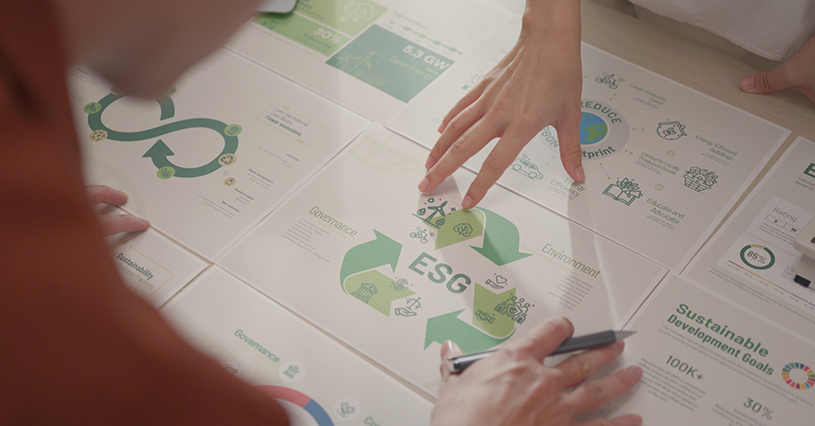
Sustainability and ESG continue to shape procurement priorities across the public sector, but the conversation is evolving.
This is no longer just about including a sustainability statement in a procurement document or adding a few environmental questions during evaluation. Organizations are increasingly looking at how sustainability can be embedded more meaningfully into procurement planning, specifications, supplier requirements, evaluation models and contract management.
For procurement professionals, this includes assessing lifecycle costs, waste reduction, circularity, emissions, responsible sourcing, supplier conduct and social value. In many cases, it also means working more closely with internal stakeholders to ensure sustainability objectives are realistic, measurable and aligned with organizational goals.
The most effective approaches are those that connect sustainability priorities to the actual category being sourced, rather than applying broad language that is difficult to evaluate or enforce.
At the same time, procurement teams are being challenged to make sustainability practical. That means asking the right questions: Which ESG factors are most relevant to this procurement? What criteria are measurable and defensible? How will commitments be monitored after contract award? And how can organizations balance requirements with market readiness?
OECM has taken a structured approach to advancing ESG and Indigenous considerations in procurement, including through continued enhancement of its award-winning Supplier Recognition Program, which highlights and encourages supplier practices aligned with environmental, social, and governance, as well as Indigenous priorities. OECM has also formalized its ESG and Indigenous commitment through its new Indigenous Marketplace, further reinforcing the importance of responsible sourcing, supplier diversity, and inclusive economic participation. To date, over 60 Indigenous organizations are participating in OECM agreements.
Public procurement plays an important role in supporting broader environmental and social outcomes. The shift underway is clear. Sustainability is no longer a separate consideration. It is an integral part of how procurement defines value.
Procurement’s role is expanding – and so is its impact
Taken together, these trends point to a broader shift in the profession.

Procurement is no longer being asked simply to buy efficiently. It is increasingly expected to help organizations respond to economic uncertainty, interpret legislative change, adopt emerging technologies responsibly, strengthen supplier performance and advance sustainability priorities, all while maintaining fairness, transparency and value for money.
This is a complex mandate, but it is also a significant opportunity.
OECM’s continued evolution, including its focus on collaboration to drive resiliency, data-driven insights, supplier relationships and engagement, and ESGI integration, reflects how procurement is adapting to meet these expectations across the public sector.
For public procurement professionals, this moment reinforces the strategic importance of the function as a critical lever for resilience, performance and public value. Organizations that invest in strategic procurement capabilities, stronger planning, and deeper market insight now will be better positioned to deliver consistent, high-quality, meaningful outcomes in the long term.
This makes procurement leadership more important than ever.
As procurement continues to evolve, ongoing dialogue across the public sector will remain essential to navigating complexity and delivering value.