
Jim Hadjiyianni, President & CEO, OECM
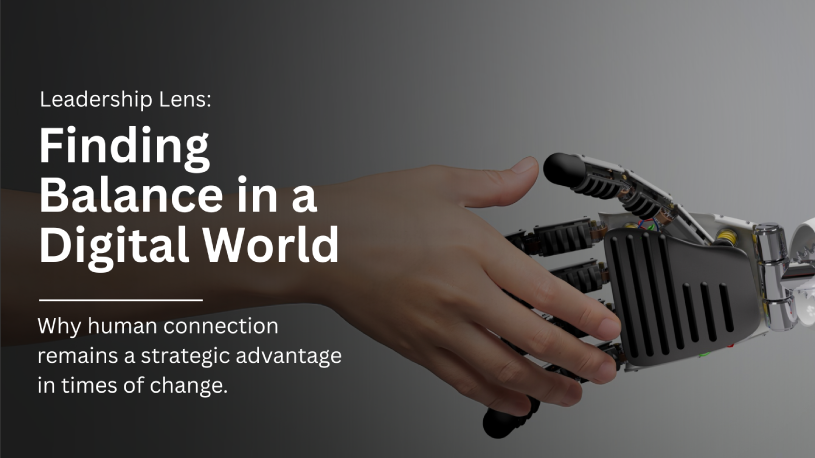
Over the last decade, organizations have invested heavily in becoming faster, more efficient, and more connected through technology.
Digital transformation has streamlined processes, improved access to information, and enabled new ways of working. Today, artificial intelligence is accelerating that evolution even further, helping organizations automate routine tasks, analyze information more effectively, and make decisions with greater speed.
These advancements are creating significant opportunities, helping organizations, including OECM, improve service delivery, increase efficiency, enhance data analytics, and focus valuable resources where they can have the greatest impact.
At the same time, the environment around us is becoming increasingly complex.
Public sector organizations are navigating economic uncertainty, policy shifts, evolving stakeholder expectations, supply chain challenges, and rapid technological advancement. The pace of change continues to accelerate, and many of the challenges we face today have no clear playbook.
As I reflect on these realities, one thought continues to resonate with me:
The last decade taught us how to build efficient work processes that eliminate the need for human interaction. The next decade may be defined by how intentionally we strengthen the relationships that make that work possible.
This is not an argument against technology. Far from it.
Digital transformation has delivered tremendous value and will continue to play a critical role in helping organizations meet the challenges ahead. But as technology becomes more capable, the human elements of leadership, collaboration, and relationship-building become more important, not less.
I believe there are three reasons why.
1. Complexity Requires Collaboration

Many of today’s challenges cannot be solved by a single organization acting alone.
Whether we are responding to supply chain disruptions, navigating regulatory changes, implementing new technologies, or addressing broader system-wide challenges, success increasingly depends on our ability to work together.
Technology can help us process information more efficiently. It can improve visibility, streamline workflows, and support better decision-making. What it cannot do is replace the conversations that build understanding, alignment, and shared commitment.
When organizations face uncertainty, solutions often emerge through dialogue. They come from people sharing experiences, testing ideas, challenging assumptions, and drawing on collective expertise. Expertise that has been honed through real-life experiences and personal connections.
This is especially true across Ontario’s broader public sector.
One of the greatest strengths of our sector is the depth of knowledge that exists across education, health care, government, and community services. Every day, organizations are solving similar challenges, learning valuable lessons, and developing innovative approaches.
The opportunity before us is not simply to exchange information more efficiently. It is to strengthen the relationships that allow knowledge and experience to move more freely across the system.
When complexity increases, collaboration becomes a strategic advantage.
And collaboration is built on human connection.
2. Trust Is Built Through Relationships

Trust has always been a cornerstone in public procurement.
Customers need confidence that procurement processes are fair, transparent, and accountable. Suppliers need confidence that opportunities are accessible and decisions are made with integrity. Government stakeholders and partners need confidence that public resources are being managed responsibly.
Strong governance frameworks, transparent processes, and clear communication all contribute to that confidence.
But trust is not built through processes alone. Trust is built through relationships.
It develops over time through consistency, transparency, and shared experience. It grows when people listen to one another, follow through on commitments, and work together to solve challenges.
In periods of stability, trust often operates quietly in the background.
In periods of uncertainty, its value becomes much more visible.
At OECM, we have seen firsthand the value of creating spaces where relationships can be built and strengthened. Initiatives such as our Customer Council Committee, Supplier Partner Council, and Indigenous Strategic Advisory Circle bring together diverse perspectives, foster meaningful dialogue, and help ensure that customers, suppliers, partners, and stakeholders have a voice in shaping the conversations that matter. These are just some of the ways we continue to invest in trust, collaboration, and shared problem-solving across the broader public sector.
Organizations that have invested in strong relationships are often better positioned to navigate disruption because they have already established the foundation needed to collaborate effectively. Conversations happen more quickly. Problems are addressed more openly. Solutions are developed with greater confidence.
In many ways, trust creates what I think of as a confidence dividend.
When trust exists, organizations spend less time managing uncertainty and more time focusing on outcomes.
That dividend becomes increasingly valuable as complexity grows.
3. Technology Elevates the Importance of Human Skills

Much of the conversation surrounding artificial intelligence focuses on what technology can do. That is an important discussion. AI will undoubtedly change how organizations operate and how work gets done.
But there is another equally important question:
What becomes more valuable as technology advances?
Many of the studies emerging on AI adoption point to a common theme: success depends as much on culture, leadership, governance, and organizational learning as it does on the technology itself.
Technology can accelerate work, but it cannot replace relationships or replicate human capabilities such as judgment, empathy, communication, critical thinking, relationship-building and the ability to bring people together around a shared goal.
As routine and transactional work becomes more automated, these human capabilities become even more important. They are often the skills that enable organizations to navigate ambiguity, build consensus, and make thoughtful decisions in complex situations.
Technology can accelerate work.
It can improve access to information and create efficiencies across countless processes.
But it does not eliminate the need for human connection. If anything, it increases its importance.
The organizations that thrive in the years ahead will not be those that simply adopt new technologies. They will be the organizations that successfully combine technological capability with strong cultures, trusted relationships, and engaged people.
Looking Ahead
The future will undoubtedly be shaped by continued technological advancement. Organizations that embrace innovation will be better positioned to serve their stakeholders, adapt to change, and create value.
At the same time, we must be intentional about preserving and strengthening the relationships that make collaboration possible.
We must continue creating opportunities for meaningful dialogue, and we must invest in partnerships and make space for the conversations that build trust and understanding. Because while technology may change how we work, it does not change what ultimately helps people navigate complexity together.
Human connection remains at the centre.
And in a world that is becoming increasingly digital, that may be one of our most important strategic advantages.
Connect with Jim on LinkedIn for more CEO insights and OECM updates: @JimHadjiyianni